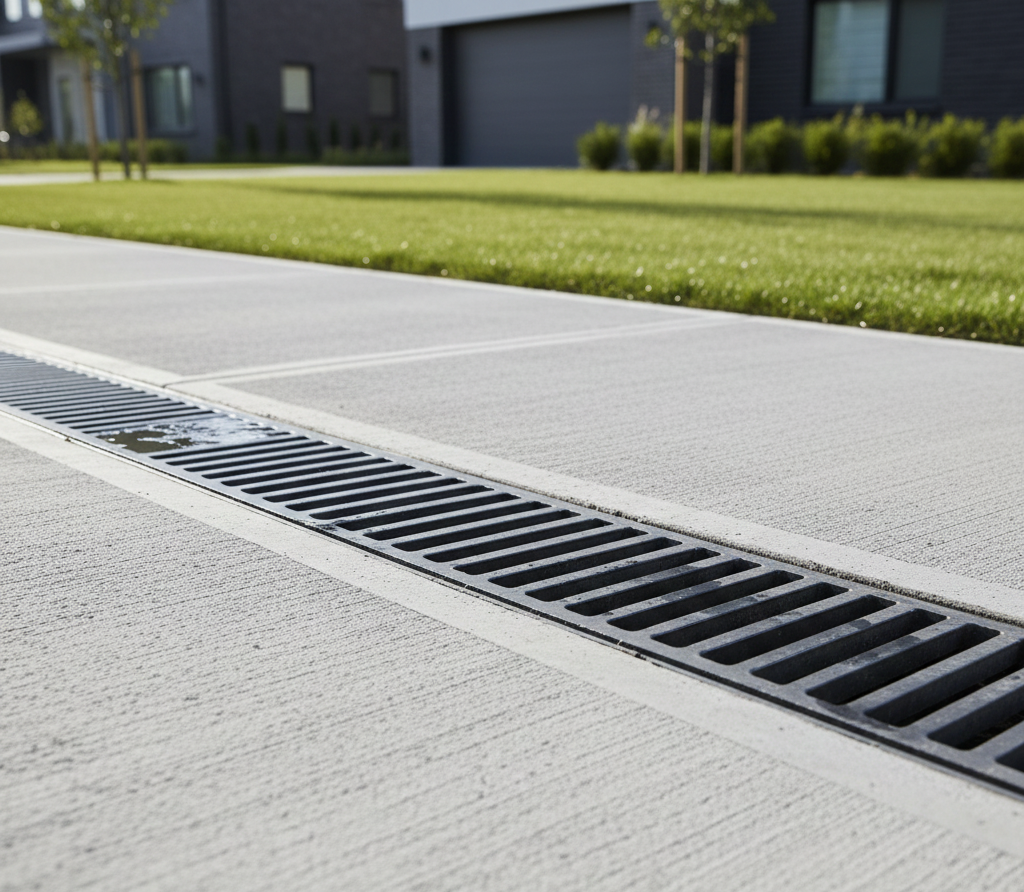
What Are French Drains? A Bay Area Homeowner's Guide to Yard and Foundation Drainage
"What are French drains?" is one of the most common questions Bay Area homeowners ask when dealing with standing water, soggy yards, or foundation moisture. At their core, French drains are subsurface drainage systems that redirect excess water away from problem areas using gravity and strategic placement. These systems have been used for decades to manage water around homes, landscapes, and foundations.
As water management specialists, Drainage Technology Solutions helps Bay Area homeowners understand how French drains work, when they make sense, and how modern drainage technologies can improve long-term performance in challenging local conditions.
What Are French Drains and How Do They Work?
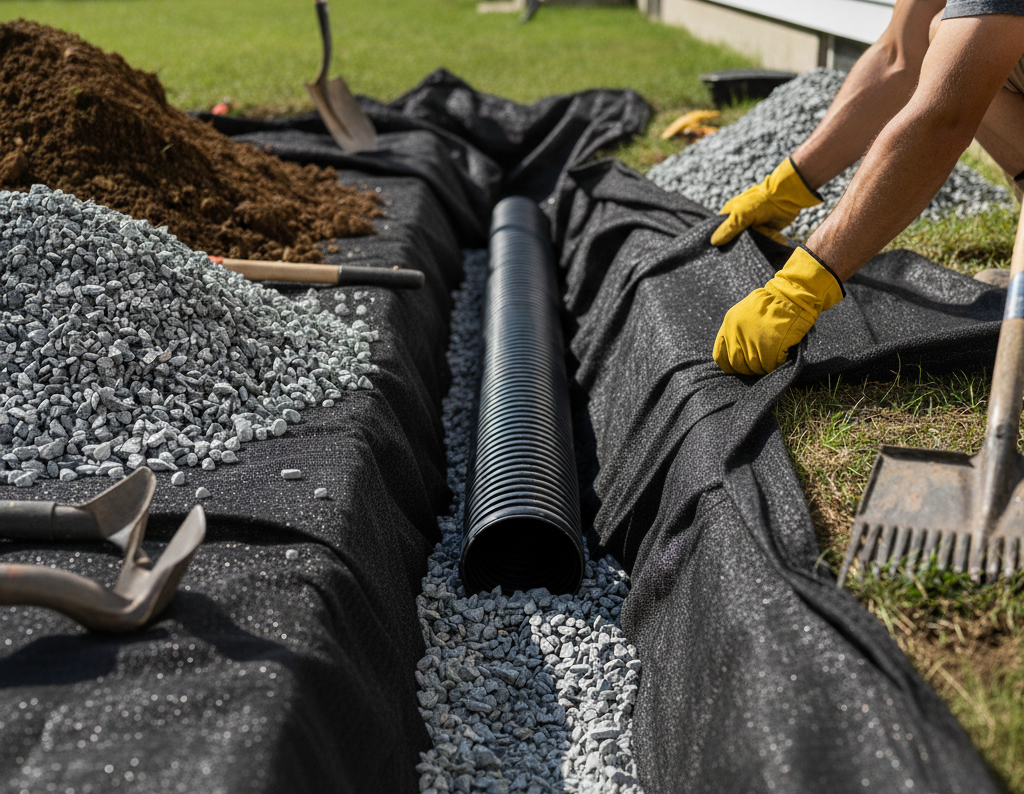
French drains are built using three primary components: a perforated pipe, graded gravel, and filter fabric. These materials work together inside a buried trench to collect and redirect water away from saturated soil.
The perforated pipe provides a pathway for water flow, while the surrounding gravel creates void space that allows water to enter the system more easily. Filter fabric limits soil intrusion while still allowing water to pass through. Depending on the application, French drains can manage surface water near the ground or be installed deeper to control subsurface or foundation moisture.
The Science Behind French Drain Performance
French drains operate on hydrostatic pressure and gravity. When water accumulates in soil, it naturally seeks the path of least resistance. The gravel-filled trench provides that path, allowing water to migrate toward the perforated pipe and flow to a designated discharge point.
Proper slope is critical. Even a modest grade, typically around 1%, helps ensure steady progress through the system. When properly designed and installed, French drains can effectively manage moderate water volumes during Bay Area downpours.
When Do Bay Area Homes Need French Drains?
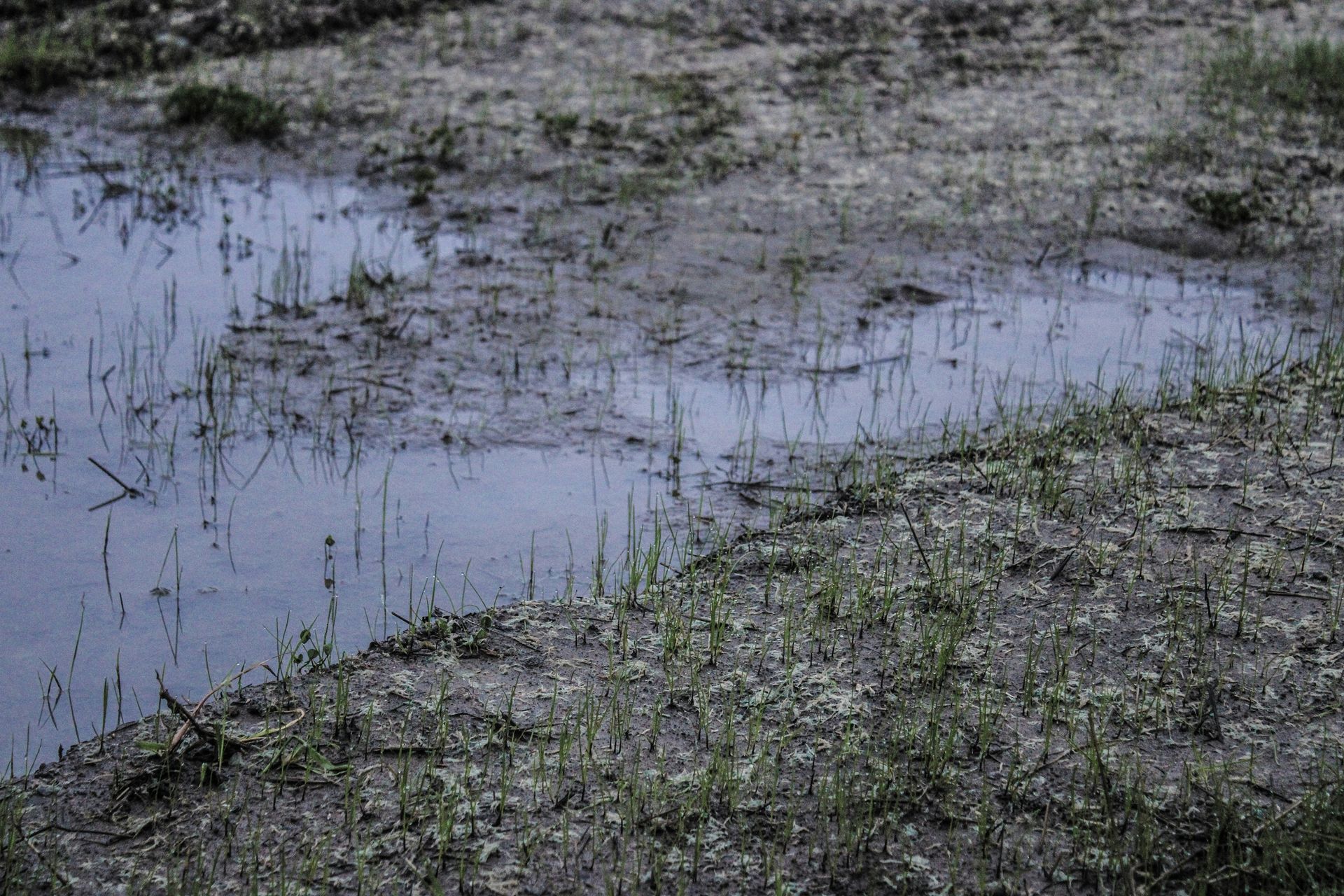
Many properties throughout Marin County, San Francisco, Berkeley, and surrounding areas experience drainage challenges due to clay-heavy soils that drain slowly and retain moisture. Hillside homes in areas such as Sausalito and Santa Rosa may also experience runoff during seasonal storms.
French drains are often considered when homeowners notice:
- Standing water that lingers long after rainfall
- Moisture intrusion near foundations or crawl spaces
- Erosion around patios, walkways, or retaining walls
- Persistently soggy lawns
- Water accumulating on the downhill side of a home or building
French Drain Installation and Maintenance
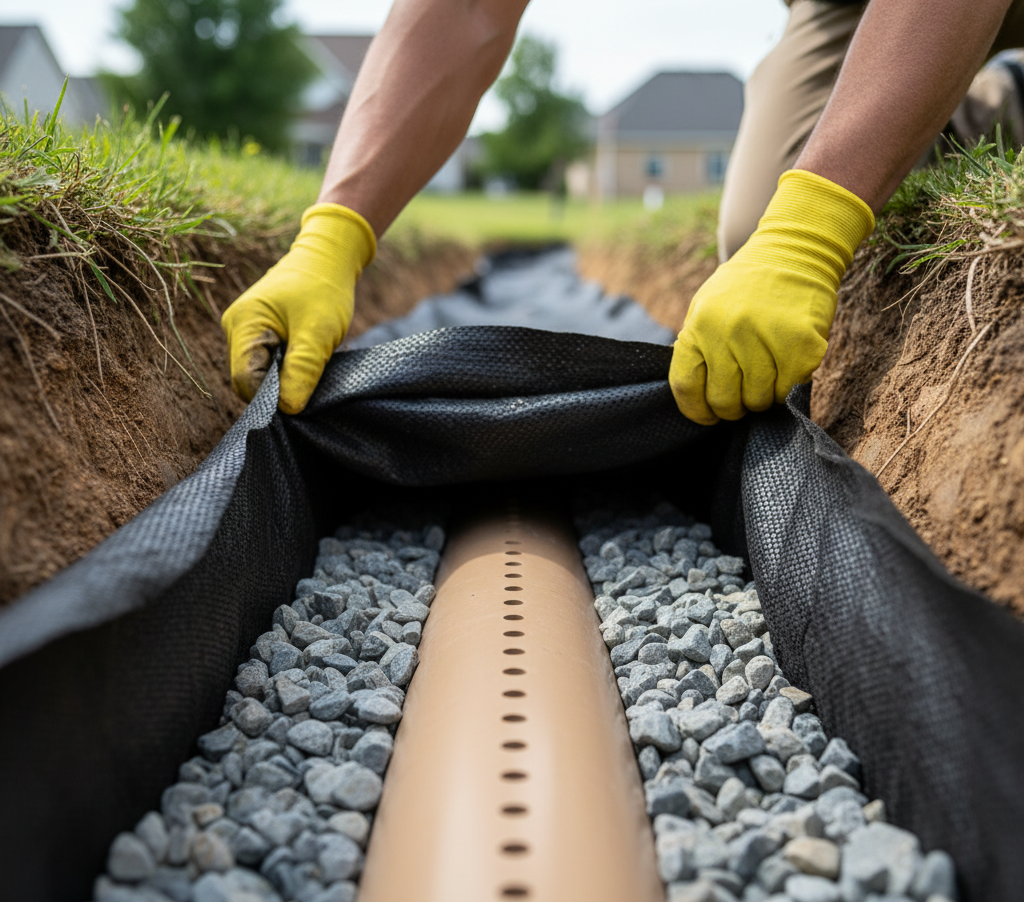
Professional French drain installations typically take several days, depending on site access, trench depth, and soil conditions. Precise excavation, accurate slope calculations, and proper material layering are essential to performance.
Long-Term Maintenance Expectations
While French drains can last 15 to 25 years, their performance may gradually decline. One of the most common issues is sediment migration into the gravel, which can restrict water flow. Root intrusion is another frequent concern, particularly in established Bay Area landscapes.
Routine inspections and occasional flushing can help extend the system's lifespan, but maintenance is often unavoidable as systems age.
A Modern Evolution: Drainage Systems Using HydroBlox Technology
HydroBlox systems are built around the same drainage principles as French drains—capturing and redirecting water—but use a different approach to achieve more consistent long-term performance. Instead of loose gravel, HydroBlox uses engineered synthetic aggregate blocks with fixed internal void space.
Because these voids do not collapse or compact, HydroBlox systems maintain their flow rate over time rather than gradually slowing as sediment accumulates. This makes them particularly well-suited for Bay Area soil, where fine particles and clay can challenge traditional gravel-based systems.
Why HydroBlox Often Delivers Longer-Lasting Results
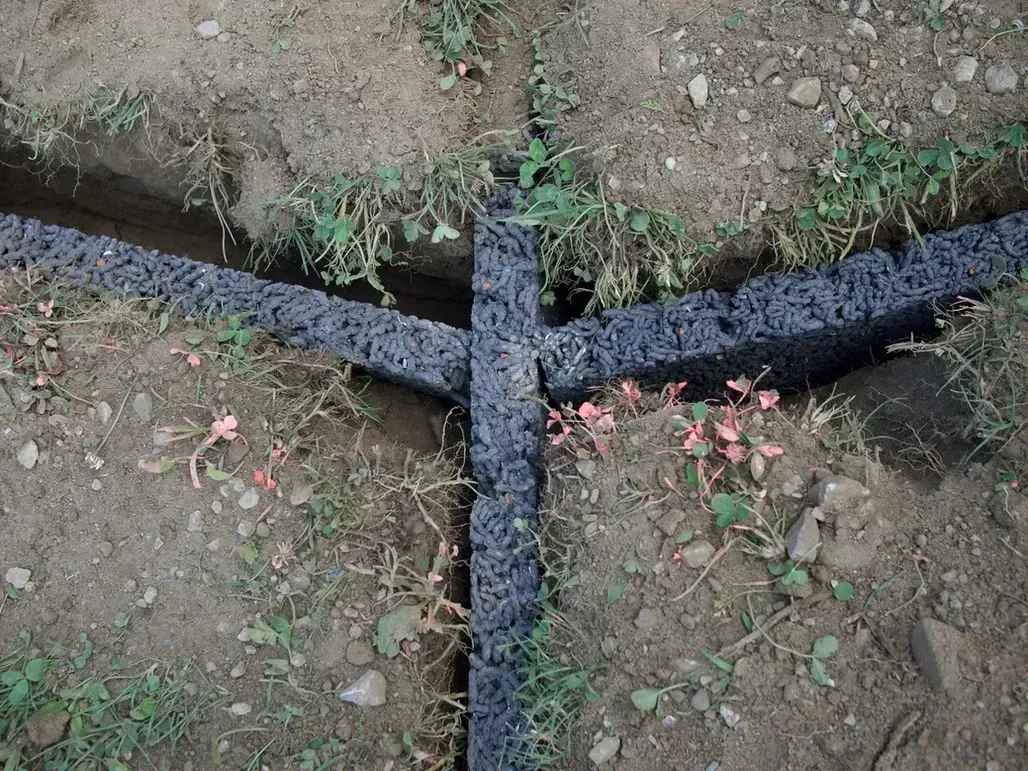
Compared to conventional French drains, HydroBlox systems are engineered to reduce common failure points. Key performance advantages may include:
- More consistent drainage over the life of the system
- Reduced susceptibility to clogging from fine soils
- Minimal ongoing maintenance
- High structural durability in residential and commercial applications
These characteristics make HydroBlox a compelling option for homeowners seeking a lower-maintenance, longer-term drainage solution.
Replacing or Enhancing Existing French Drains
HydroBlox doesn’t require abandoning existing drainage infrastructure. In many cases, it can be integrated into current French drain systems to improve flow and extend service life. For aging or underperforming drains, HydroBlox can also serve as a full replacement where appropriate.
Determining the right approach depends on site conditions, water volume, and existing system performance, factors best evaluated through a professional assessment.
Discover the Best Drainage Solution for Your Home
Understanding what French drains are—and how newer systems improve on them—helps homeowners make informed decisions about long-term water management. While traditional French drains remain effective in many scenarios, modern technologies such as HydroBlox offer an advanced alternative that performs reliably with less maintenance.
Drainage Technology Solutions provides professional drainage assessments, HydroBlox system installations, and French drain upgrades throughout the Bay Area.
Schedule a free assessment today and let us help you determine the best fit for your property.